
The purchase used to be the point. Brands optimized for it obsessively: faster checkout, better discovery, smarter recommendations. They got very good at getting people to buy.
That's no longer enough.
A new generation of shoppers has quietly moved the goalpost. For them, loyalty isn't decided at checkout. It's decided afterward: the moment a return gets processed, an issue gets resolved, or a brand proves it actually shows up when something goes wrong.
Secondhand has moved with them. More than half of Gen Z bought resale online in the past year, according to Seel's 2026 Gen Z Shopping Confidence & Loyalty Report, which surveyed over 1,000 U.S. consumers. Not as an experiment. As a habit. Compare that to 53% of Millennials and just 26% of Gen X, and the direction of travel is clear.
The brands still focused only on the checkout are already behind.
Why Gen Z is leaning into secondhand
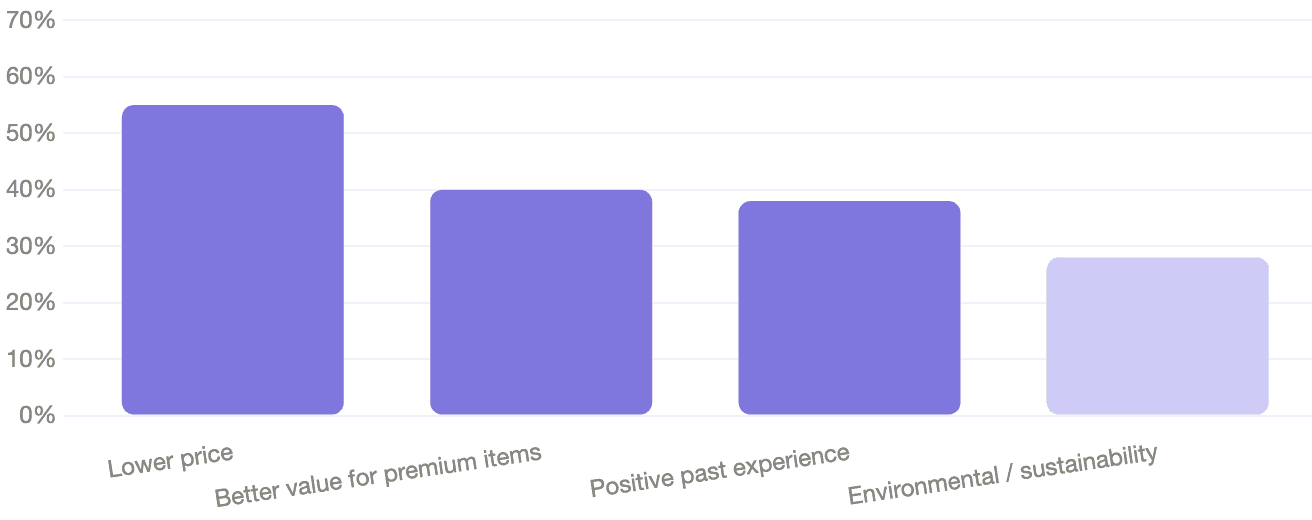
Gen Z secondhand motivations
Source: Seel's 2026 Gen Z Shopping Confidence & Loyalty Report
Sustainability is part of the story. It's just not the leading one.
The motivations driving secondhand adoption are more practical than the prevailing narrative suggests. Among secondhand buyers, the top reasons are lower price (55%), better value on premium or branded items (40%), and positive past experience (38%). Environmental reasons come in at a distant 28% as a nice bonus, not the deciding factor.
That reframe matters. Resale is no longer a values-driven niche. It's a smart, increasingly routine part of how a price-sensitive, brand-aware generation shops. For merchants and platforms, that's not a trend to monitor. It's a shift to build for.
Gen Z is driving secondhand growth. Confidence is what's going to scale it.
Among shoppers who don't yet buy secondhand, the hesitations are practical rather than philosophical: concerns about product quality or condition (23%), high shipping costs (25%), and a preference for new items (22%). These aren't hard objections. They're solvable ones, which means the window for brands and platforms to step in is wide open.
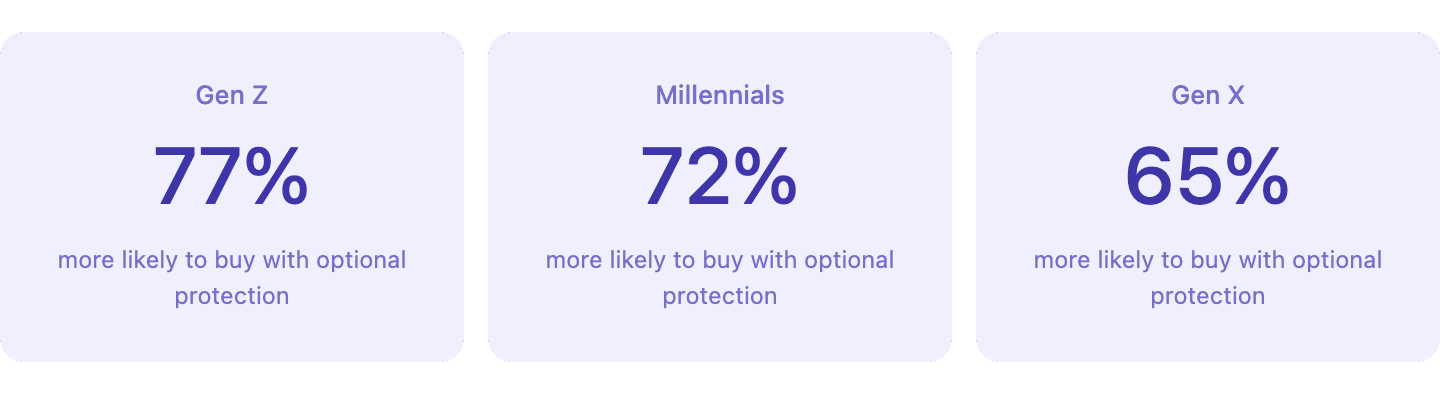
Purchase confidence across generations
Source: Seel's 2026 Gen Z Shopping Confidence & Loyalty Report
That need for reassurance shows up directly at checkout. 77% of younger shoppers say they would be more likely to complete a purchase if optional protection were offered. Millennials track closely at 72%, Gen X at 65%. Across generations, the ask is the same: make it feel safer to buy.
The categories where it matters most are consumer electronics and fashion, precisely where fit, condition, and value are hardest to judge from a listing. For brands that get this right, confidence becomes a conversion tool, not just a reassurance.
Post-purchase is where conversion turns into retention or churn
A bad return experience costs more than most brands realize.
57% of all shoppers have stopped buying from a brand because of a poor return or refund experience. Among younger shoppers, 61% have decided not to buy something at all because of a return policy, before they've even tried the product.
A shopper might find something through a great price, a well-curated assortment, or a video that stopped them mid-scroll. Whether they come back has very little to do with any of that. It comes down to what the brand does when something goes wrong.
What drives checkout is no longer what drives loyalty
Brands have been solving for the wrong moment.
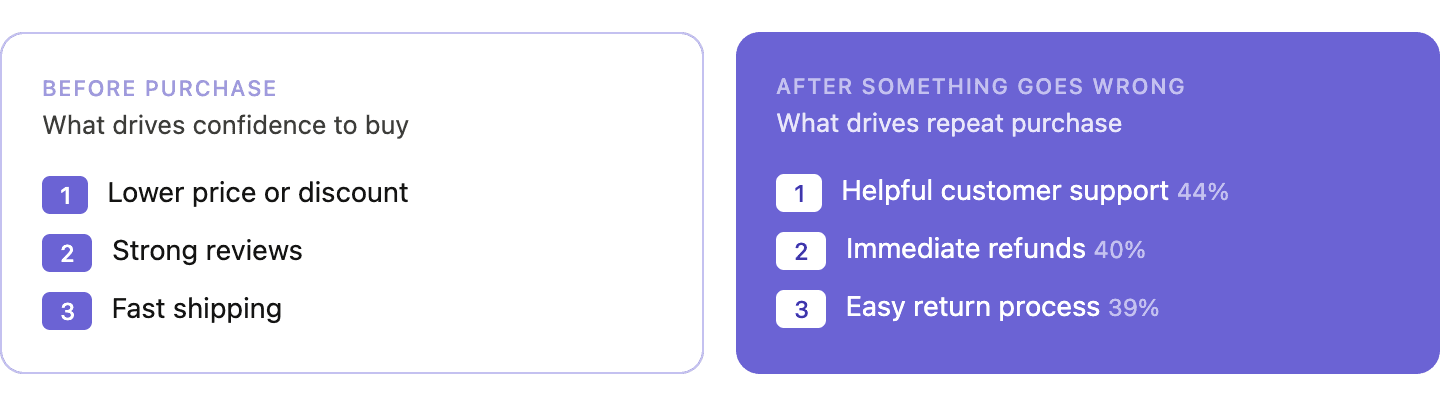
For Gen Z, the top factors that inspire enough confidence to complete a purchase are still familiar: lower price or discount, strong reviews, fast shipping. But once something goes wrong, the drivers of repeat purchase shift entirely. The most important factors become helpful customer support (44%), immediate refunds (40%), and an easy return process (39%).
Gen Z loyalty drivers
Source: Seel's 2026 Gen Z Shopping Confidence & Loyalty Report
The broader pattern holds across generations. Millennials and Gen X rank lower price, fast shipping, and strong reviews as their top pre-purchase confidence drivers as well. But post-issue, loyalty shifts toward resolution. For Millennials, immediate refunds (46%), helpful customer support (43%), and an easy return process (37%) lead. For Gen X, immediate refunds (53%), an easy return process (45%), and helpful customer support (44%) rise to the top.
Post-purchase has quietly become the confidence loop that drives future conversion.
Resolution speed is now one of the clearest drivers of satisfaction
Shoppers have no patience for slow resolution, and the numbers make that impossible to ignore.
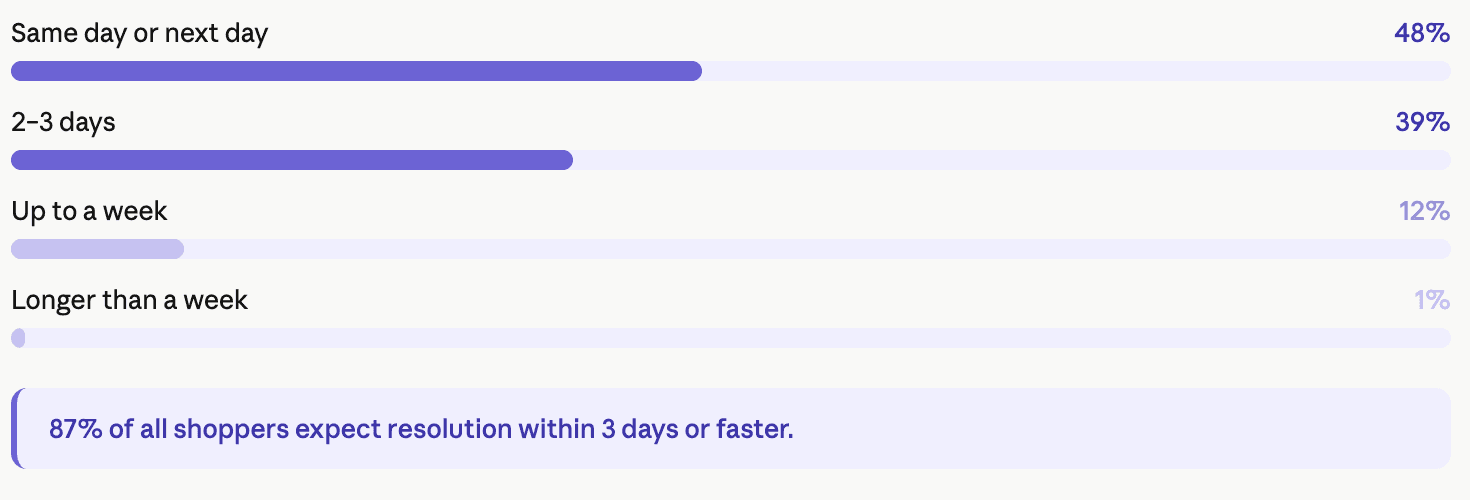
87% of shoppers expect their issue to be resolved within 2 to 3 days. Only 1% will tolerate waiting longer than a week. There is no grace period anymore.
Resolution speed expectations
Source: Seel's 2026 Gen Z Shopping Confidence & Loyalty Report
The reasons Gen Z abandon a purchase because of a return policy tell the same story: the policy felt too restrictive (36%), refunds take too long (34%), it wasn't clear whether an item would even qualify for return (31%), or the process just seemed like a headache (29%). Millennials are especially put off by complicated return processes (39%) and slow refunds (36%). Gen X hesitates most when eligibility feels murky (35%) or return shipping costs too much (34%).
The risk picture reinforces it. For Gen Z, the purchases that feel scariest are items arriving damaged (50%), things that don't fit or suit their needs (44%), and lost or stolen packages (44%). Across every generation, fragile, refurbished, luxury, and secondhand items consistently rank as the riskiest buys online.
For resale platforms, the stakes are even higher. These purchases already carry more uncertainty around condition, fit, and what happens if something goes wrong. When a customer needs help, speed and clarity aren't just good service. They're the difference between a brand someone trusts and one they warn their friends about.
Social commerce has changed product discovery and the trust equation
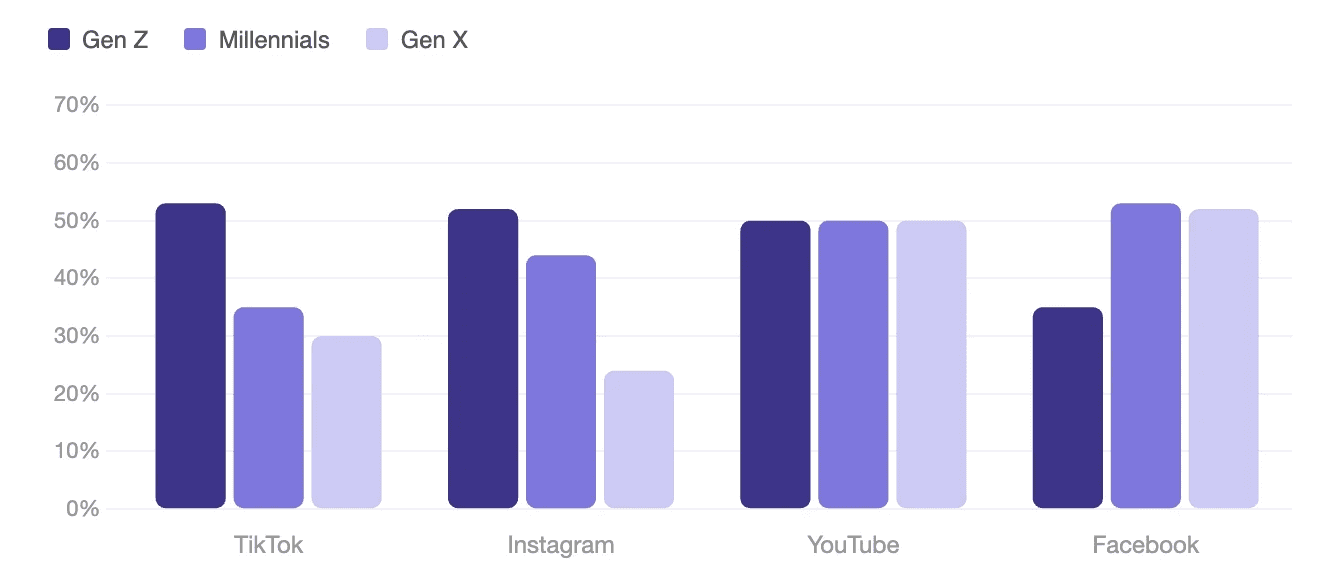
Most trusted platforms for discovering products, by generation
Source: Seel's 2026 Gen Z Shopping Confidence & Loyalty Report
Younger shoppers aren't finding products. Products are finding them.
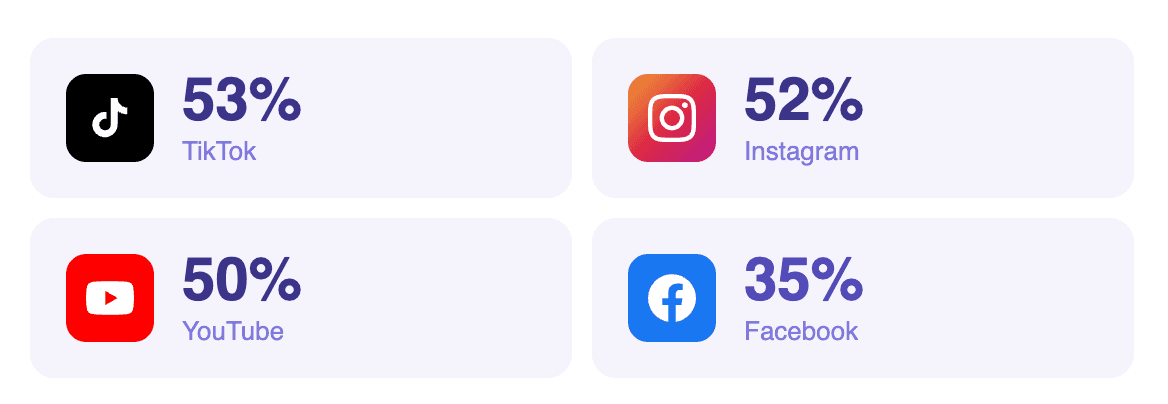
Their most trusted platforms for discovery: TikTok (53%), Instagram (52%), and YouTube (50%). Facebook trails at 35%, a number that says everything about where generational attention has moved. Only 3% say they never buy something discovered on social. 84% do so at least sometimes.
The generational contrast is sharp. For Millennials, the most trusted discovery platforms are Facebook (53%), YouTube (50%), and Instagram (44%). For Gen X, Facebook (52%) remains dominant, while trust in TikTok (30%) and Instagram (24%) ranked decidedly lower. Gen X is also much more likely to say they do not trust social media platforms for product discovery at all (26%, versus 10% for Millennials).
Gen Z most trusted platforms for discovering products
Source: Seel's 2026 Gen Z Shopping Confidence & Loyalty Report
That gap matters more than it might appear. When a product finds you through a creator, a resale listing, or a brand you've never heard of, the usual trust signals aren't there. There's no storefront, no established reputation, no predictable return desk. The ecosystem is wider, faster, and far less familiar than anything that came before it. Confidence still determines whether they complete the purchase. In a world where discovery is effortless, earning that confidence is the hard part.
What this means for merchants
The data points in one direction. Younger shoppers are not waiting for brands to catch up, and the ones that do will feel it in their numbers.The shift is less about overhauling everything and more about paying attention to the moments that already matter. A few places to start:
Reduce uncertainty before the shopper buys. Hesitation peaks when a purchase feels fragile, hard to evaluate, or difficult to reverse. Clearer product information, condition transparency, and stronger confidence signals can turn browsers into buyers.
Treat return policy as a conversion lever. Restrictive policies, unclear eligibility, slow refunds, and high return shipping costs don't just frustrate customers after the fact. They stop purchases from happening in the first place.
Prioritize speed when something goes wrong. Fast, accurate resolution protects trust, encourages repeat purchases, and builds loyalty across every generation. It is not a support function. It is a growth function.
Build trust where risk is highest. Consumer electronics, fashion, fragile items, refurbished products, luxury goods, and secondhand purchases all carry elevated perceived risk. These are exactly the moments where getting the post-purchase experience right has the greatest commercial impact.
The brands and platforms that invest here will be best positioned to strengthen conversion, earn repeat purchases, and build more durable customer relationships.
Looking ahead
The checkout is not the finish line. What comes after it is where the real competition begins.
As younger consumers continue reshaping online shopping behavior, the brands that stand out will not simply be the brands with the best products or lowest prices. They will be the brands that make customers feel protected when things go wrong.
For merchants, the path forward is practical:
Make purchase expectations clearer before checkout
Flexible and transparent return policies
Resolve issues quickly and consistently
Build trust and lower perceived risk
The retailers that recognize it early will be in the strongest position to earn long-term loyalty in the next era of commerce.
About the Survey
Seel’s 2026 Gen Z Shopping Confidence & Loyalty Report is based on a survey of 1,049 U.S. consumers. Responses were collected using the research platform, Centiment. Respondents included a cross-section of age groups, with 24.7% ages 18–22, 38.1% ages 23–28, 8.3% ages 29–35, 12.5% ages 36–45, and 16.4% ages 46+. The sample was 46.1% male and 50.9% female, with additional representation from non-binary and self-described respondents.
The survey also included a range of income brackets and respondents across all major U.S. regions: 25.1% Northeast, 23.1% Midwest, 33.9% South, and 17.9% West. Respondents were active online shoppers, with most reporting that they shop online at least a few times per month.